 View full size ↗
The everyday problem
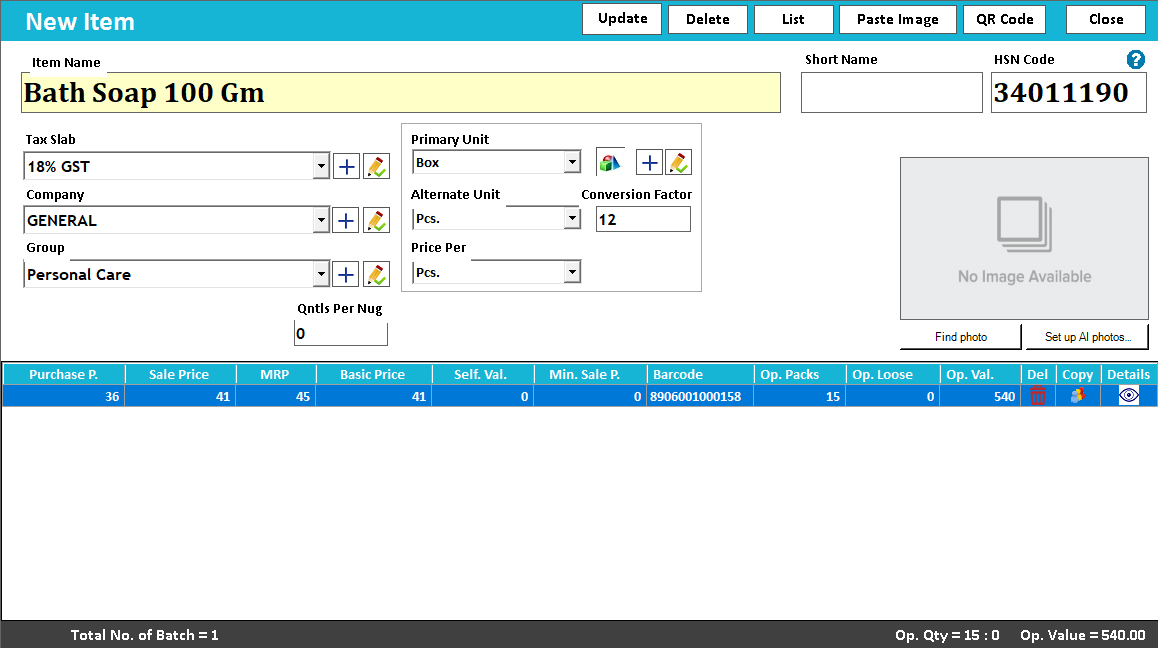
A product bought by the box and sold by the piece needs a shared understanding of the unit used in each entry. Without it, a quantity that looks reasonable can represent very different amounts of physical stock.
A workable process
Choose a test item and write down its purchase pack, sale unit and conversion. Ask the demo team to show how the configured item records handle these units. Complete a small purchase and sale, then compare the resulting quantity with a manual calculation.
A practical example
Suppose a box contains 12 pieces. Receiving two boxes should represent 24 pieces before any sales. After selling three pieces, the physical expectation is 21. The example is simple enough that a disagreement in the configured workflow is easy to spot.
Before you finish
Check the unit on item search, purchase entry, sale entry and reports. Re-test when a supplier changes pack size; do not silently apply the old conversion to a new package.
Try this check with your team
For a sample pack of 12 pieces, follow a receipt of 3 packs and a sale of 7 pieces. Before other movements, 29 pieces remain. Inspect the selected unit, conversion and rate basis on both transactions.
What the result tells you
If the result is 3 minus 7, the entries did not use the intended conversion. Fix the unit setup and source records through the agreed process before correcting the apparent shortage with an unrelated stock adjustment.
See this workflow in Speed Plus.
Bring a sample transaction and your questions to a product demo.
Book a free demo ↗