 View full size ↗
The everyday problem
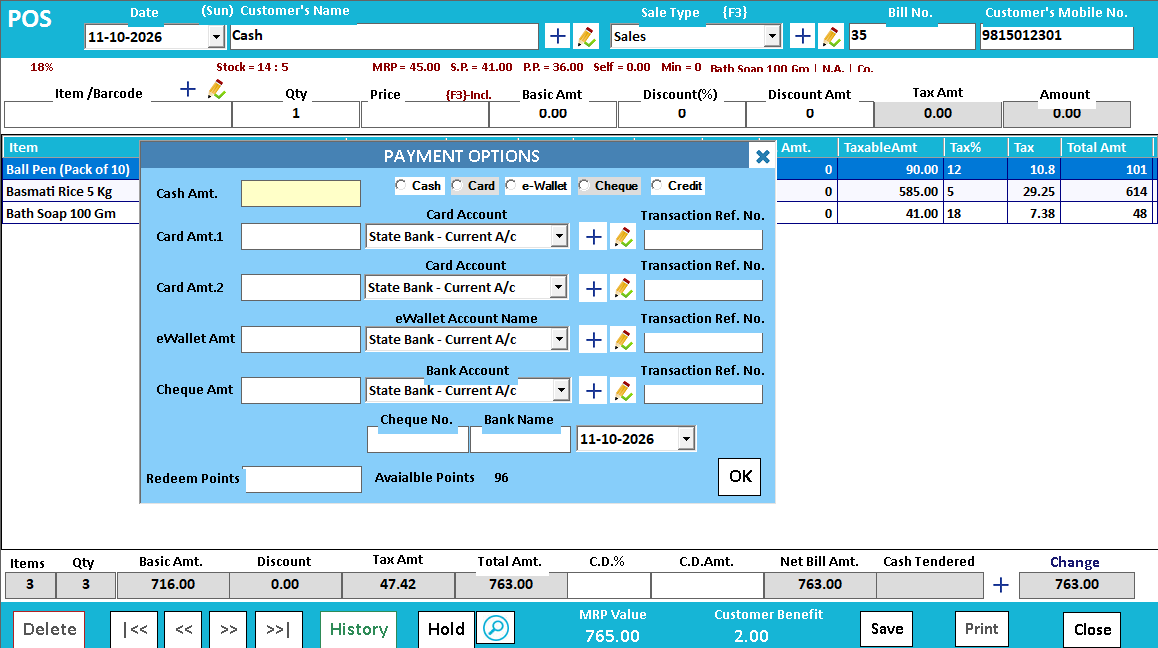
Customer details are useful only when they are accurate enough to identify the right person later. Asking for too much information can slow the counter, while rushed or invented entries make follow-up difficult.
A workable process
Decide which fields your business actually needs and check the requirements of the selected POS workflow. Let staff read back important details such as the mobile number. Before creating another record, use the available lookup process to check whether the customer already exists.
A practical example
Two people may share a common name, while a returning customer may spell their name differently on the next visit. A consistent lookup process reduces accidental duplicates. Avoid reusing another customer's record merely because its name is close to the one spoken at the counter.
Before you finish
Explain why the information is being collected and follow the business's privacy policy. Restrict access appropriately, and do not enter placeholder phone numbers into real customer records to bypass a workflow.
Try this check with your team
Search for an existing customer before creating a new record. Compare the name and mobile number with the person at the counter, especially where family members share a number. Review the intended recipient before sending the bill or assigning a loyalty member.
What the result tells you
Duplicate or incorrect identities can split history and send documents to the wrong person. Resolve the identity deliberately; do not overwrite an existing customer merely because a similar name appeared first in search.
See this workflow in Speed Plus.
Bring a sample transaction and your questions to a product demo.
Book a free demo ↗